

When to Say No to a New Market
Expansion works when the engine is proven. Too many SMEs expand to escape a problem at home instead.
Read time: 6 minutes
For the past two years, the dominant conversation about AI in marketing has been about speed and cost: content produced faster, ad variants generated cheaper, reports assembled instantly instead of over a weekend.
This framing is accurate as far as it goes, and it has led a significant number of SMEs to a quietly mistaken conclusion — that AI adoption is itself a strategy, rather than a tool that makes the absence of one far more visible than it used to be.
Here is the uncomfortable arithmetic AI adoption creates for every business, including yours:
If a capability is available to you, it is available to every competitor at the same price and the same speed, within a short window.
Faster content, cheaper analysis, instant reporting — these were genuine advantages when they were expensive or slow to produce.
They stop being advantages the moment they become table stakes for anyone with a subscription.
This means the honest question is no longer:
“How do we adopt AI faster than competitors?”
Nearly everyone adopts the same tools at nearly the same rate.
The question that actually determines who wins is:
“Once analysis is cheap and content is fast for everyone, what is left to differentiate on?”
The answer, consistently, is judgment — the ability to decide what actually matters, for this specific business, in this specific market, right now.
AI has no opinion on that.
It was never designed to.
Before affordable AI tools, a resource-constrained SME had a legitimate excuse for a thin strategy.
Proper market analysis was expensive, competitive intelligence was time-consuming to gather, and content production was slow enough that testing multiple strategic directions in parallel simply wasn’t affordable.
Strategy got compressed to save time and budget for execution, and that trade-off was defensible given the constraints.
That excuse is largely gone.
Analysis that once required a research budget can now be assembled in an afternoon.
Testing three positioning angles in parallel no longer requires three separate production budgets.
The constraint that used to force strategic corner-cutting has been substantially removed.
Which means a thin strategy today is no longer a resource limitation.
It is a choice.
And it shows up as one in the results.
AI can process information quickly.
But processing information is not the same as understanding the business.
A business still needs to know who its customers are, why they buy, why they leave, what alternatives they consider, where the business is strong, where it is weak and which problems actually deserve attention.
Those questions require diagnosis.
AI can help accelerate the process of gathering and synthesising evidence, but the business still needs to determine what that evidence means.
That is why AI works best as an additional layer on top of a sound growth system, rather than as a substitute for one.
The businesses getting genuine value from AI are not the ones using it to skip strategic thinking.
They are the ones using it to compress the distance between having a strategic insight and being able to act on it at scale.
AI can help businesses test the small, cheap experiments required to validate an idea without the production bottleneck that used to make validation slow and expensive.
Different messages can be developed.
Different creative directions can be tested.
Different customer propositions can be explored.
But the strategic principle remains unchanged:
Validate before you scale.
AI can synthesise customer, business and competitive signals faster, helping the diagnostic stage produce a clearer brief instead of simply taking longer.
Customer feedback, sales information, market observations and internal data can be organised and compared more efficiently.
But faster analysis does not automatically create better judgment.
The quality of the strategic output still depends on the quality of the questions being asked and the context in which the information is interpreted.
Once a position, a funnel, or a message has been validated at small scale, AI can help produce the volume of assets needed to run it at full scale without proportionally increasing the production budget.
This is where AI can create genuine leverage.
But the sequence matters:
Insight. Validate. Refine. Then scale.
AI should accelerate a proven idea rather than become the mechanism through which an unproven idea is multiplied.
In every one of these cases, AI is accelerating a decision a human already made.
It is not making the decision.
That distinction matters.
An AI system can produce ten possible headlines.
It can produce ten campaign concepts.
It can produce ten positioning statements.
It can produce ten possible customer segments.
But which one is actually right for your customer?
Which one fits your margin?
Which one makes sense in your current market?
Which one can your business actually deliver?
Which one creates a defensible position rather than simply sounding convincing?
Those are judgment questions.
There is a specific kind of judgment AI structurally cannot supply:
Knowing which of the ten things it just generated is actually right for your customer, your margin, and your moment in the market — as opposed to merely plausible, well-written, and statistically reasonable.
That judgment comes from the diagnostic work earlier in the growth journey:
AI can compress the time it takes to act on that knowledge.
It cannot generate the knowledge itself.
A business that skips the underlying work while adopting the tooling ends up producing more content, faster, in service of a strategy that still doesn’t exist.
The most obvious risk is volume without direction.
A business can now produce more content, more advertisements, more emails and more variations than ever before.
But more activity does not necessarily mean more growth.
If the underlying positioning is weak, AI can produce hundreds of variations of weak positioning.
If the offer is wrong, AI can produce more creative promoting the wrong offer.
If the customer diagnosis is inaccurate, AI can help communicate the wrong message to more people.
If the funnel is broken, AI can help generate more traffic into the broken funnel.
The principle is simple:
Technology multiplies what you give it.
It does not automatically determine whether what you give it deserves to be multiplied.
AI changes the economics of execution.
It can reduce the cost of producing and testing ideas.
It can accelerate analysis.
It can increase production capacity.
It can help teams do more without proportionally increasing headcount.
But it does not remove the need to decide what deserves to be done.
That is why SMEs should not begin their AI journey with:
“What can AI do for us?”
A better question is:
“Which decisions, processes and proven ideas could AI help us execute better?”
That small change in framing can prevent a great deal of wasted effort.
Imagine two businesses with access to exactly the same AI tools.
Both can produce content quickly.
Both can analyse customer information.
Both can generate campaign concepts.
Both can automate repetitive work.
But one business understands its customer deeply, has a clear position and knows which problem it is trying to solve.
The other is using AI to figure out what to say next.
The difference between them is not the technology.
It is the quality of the decisions being made before the technology is deployed.
The first business uses AI as leverage.
The second uses AI as a substitute for clarity.
Those are very different outcomes.
If your competitors now have access to the same speed and the same cost advantages you do, the differentiator has quietly shifted back to something AI adoption alone cannot buy.
A genuinely well-diagnosed customer.
A genuinely defensible position.
A clear understanding of the market.
Sound business economics.
And the discipline to validate before scaling.
AI didn’t replace the need for that work.
It removed the last legitimate reason not to have already done it.
And it rewards, faster and more visibly than ever, the businesses that had already done it before everyone else caught up on tooling.
No. AI can accelerate research, analysis, content production, experimentation and execution, but strategic judgment still requires understanding the business, customer, market and desired outcome.
SMEs can use AI to accelerate proven processes, analyse information, test ideas, produce content, support customer interactions and reduce repetitive work. The strongest applications are connected to clear business objectives rather than AI adoption for its own sake.
AI can create an advantage when it is applied intelligently to a specific business problem, but access to many AI capabilities is becoming widespread. Sustainable differentiation therefore increasingly depends on the quality of the strategy and judgment guiding the technology.
AI tools can still be useful without a formal strategy, but businesses should avoid treating the technology as a replacement for strategic thinking. Without a clear direction, AI can increase activity without improving the underlying business outcome.
AI is particularly valuable for compressing the distance between insight and execution. It can help businesses analyse information faster, test ideas more cheaply and scale proven approaches more efficiently while leaving strategic decisions under human ownership.
AI makes execution faster, but faster execution only creates meaningful growth when the business knows what it should be executing.
The foundation remains the same: understand the customer, establish a defensible position, validate the opportunity, build a working growth engine and then use technology to increase leverage.
Explore more practical thinking on strategy, transformation and growth through the Elan Africa Growth Lab.
If you want to identify where your business currently stands before investing further in growth, technology or AI, use the Growth Diagnostic.
If you want to discuss how AI can fit into a broader business growth strategy rather than operate as another disconnected tool, book a Strategy Session with Elan Africa.
AI didn’t replace strategy. It removed the excuse not to have one.
Expansion works when the engine is proven. Too many SMEs expand to escape a problem at home instead.
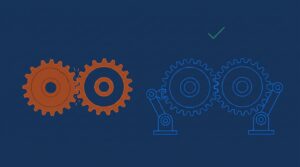
Automating a broken process just makes it fail faster. Systemising means fixing the process first.

Full-scale go-to-market fails less often on creative than on the boring operational handoffs around it.

Cheap experiments exist to be wrong safely. Skipping them means finding out the expensive way instead.